From Scrap to Product

Project
The textile industry generates large volumes of fabric waste every day, much of which is discarded despite retaining significant material value. This project explored the potential of transforming chindi—textile industry scrap—into contemporary lifestyle products through material experimentation, craft-based interventions, and design innovation.
By studying the properties of textile waste and developing techniques such as patchwork, reinforcement stitching, and weaving, the project reimagined discarded materials as valuable resources. The outcome was a series of collections spanning home décor and lifestyle accessories, demonstrating how waste can be transformed into functional, aesthetically appealing, and meaningful products. Through this process, the project sought to bridge sustainability, craftsmanship, and contemporary design while extending the life cycle of textile materials.
Process

Understanding the Context
Researching Surat's textile ecosystem and understanding the journey of textile waste from production to disposal.
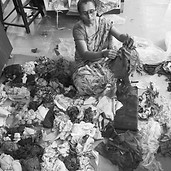
Material Collection & Analysis
Documenting, categorizing, and studying the properties of textile industry (Ganga fashions) scrap.

Material Explorations
Exploring different techniques to understand how chindi can be transformed into new material systems.
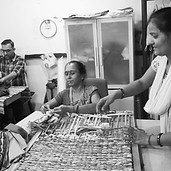
Technique Development & production
Refining material explorations into repeatable techniques and translating them into functional, manufacturable product systems.

Final Collection
Developing a series of contemporary lifestyle products that showcase the potential of textile waste transformation through craft, material innovation, and design..
-
India generates approximately 7.8 million tonnes of textile waste annually.
-
A significant portion of this waste is pre-consumer waste, generated during cutting, sampling, and production processes.
-
Surat is one of India's largest textile manufacturing hubs, producing large quantities of fabric offcuts and surplus materials every day.
-
Much of this waste is either downcycled, sold at low value, or sent to landfill.
Research
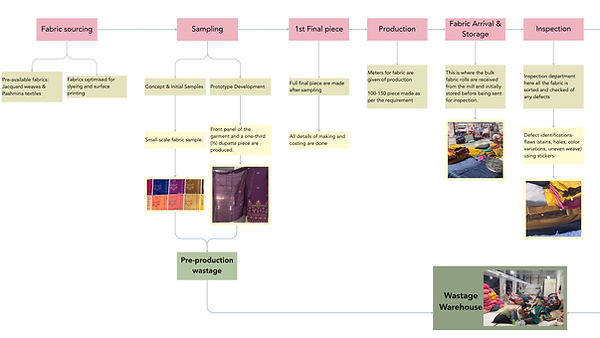
Production mapping at Ganga
.png)
.png)

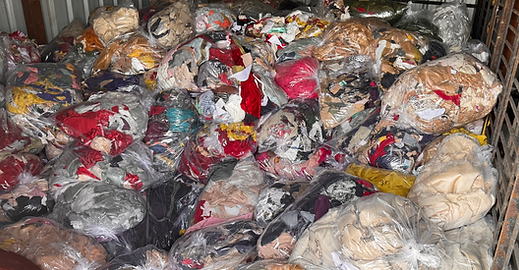
After Observing and engagement with the unit, the smaller textile scraps- CHINDI, are the most consistent and voluminous waste stream.
Material Collection & Analysis
Textile scraps were sourced from manufacturing unit and categorized based on fabric type, color, texture, size, and usability. Understanding these characteristics helped identify suitable techniques and product applications.
Key Findings:
-
High color diversity
-
Irregular shapes and sizes
-
Mix of woven and knitted fabrics
-
Soft yet durable material

Explorations


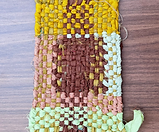


Sampling


Final Collections
Collection 01 — Structured Surfaces
Exploring layered surfaces through patchwork, reinforcement stitching, and textile composition to create tactile home products.


Products:
-
Cushion covers
-
Organising tray
-
Bed runner


Collection 02 — Interlace
A collection exploring weaving techniques through textile waste transformation.


Products:
-
Rug
-
Runner
-
Coasters
-
Indoor shoes


Collection 03 — Converge
A hybrid collection combining woven, patched, and reinforced textile systems into contemporary lifestyle accessories.


Products:
-
Bags


Brand Narrative
Phir Se is rooted in the belief that discarded materials deserve a second life. By transforming textile industry scrap into contemporary lifestyle products, the project challenges conventional perceptions of waste and celebrates the value hidden within overlooked materials. Through craft, material innovation, and thoughtful design, each product tells a story of renewal, demonstrating how sustainability and aesthetics can coexist.
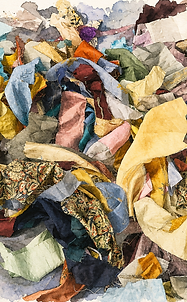
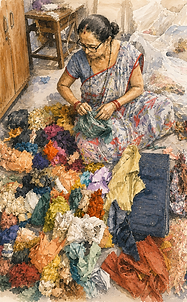
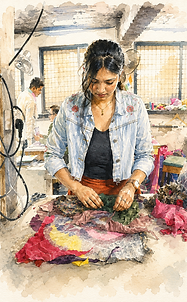
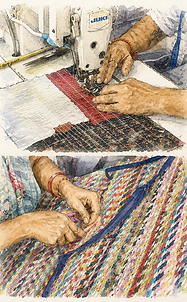
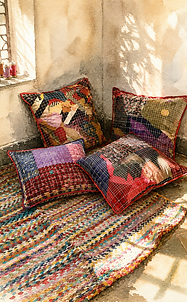
Every product begins as a discarded textile fragment. Through techniques such as patchwork, weaving, braiding, and reinforcement stitching, these remnants are transformed into functional objects. The visible traces of the original material become an integral part of the design, allowing each product to communicate its journey from waste to value.
Brand Value
Sustainability – Extending the life cycle of textile waste.
Craftsmanship – Celebrating making and material knowledge.
Innovation – Discovering new possibilities within discarded materials.
Storytelling – Communicating the journey behind each product.
Circularity – Creating value from what would otherwise be wasted.
Transforming textile waste into products with purpose, value, and a second life.
Learnings
-
One of the strongest learnings from the project was understanding that material itself can guide the direction of design.Different techniques produced different behaviours, and these behaviours naturally informed the applications they were best suited for.
-
Fragmented textile waste can be reorganised into functional systems through structured construction techniques.
-
Material irregularity can become part of the visual and tactile identity of products rather than only a limitation.
-
Different techniques improved structural stability and usability of material and products in different ways.
-
Durability and functionality are important for creating meaningful sustainable products with longer product life.
-
Introducing new techniques within existing production systems can expand artisan skill sets and production possibilities.
-
Working closely with artisans highlighted the role of craftsmanship within material transformation.
-
Visible textures, seams, weaving, and handcrafted detailing helped create a distinct identity rooted in material transformation and making processes.
